The Lower Shelf: London’s Basement Bookshops and the Pleasure of Finding Nothing in Particular
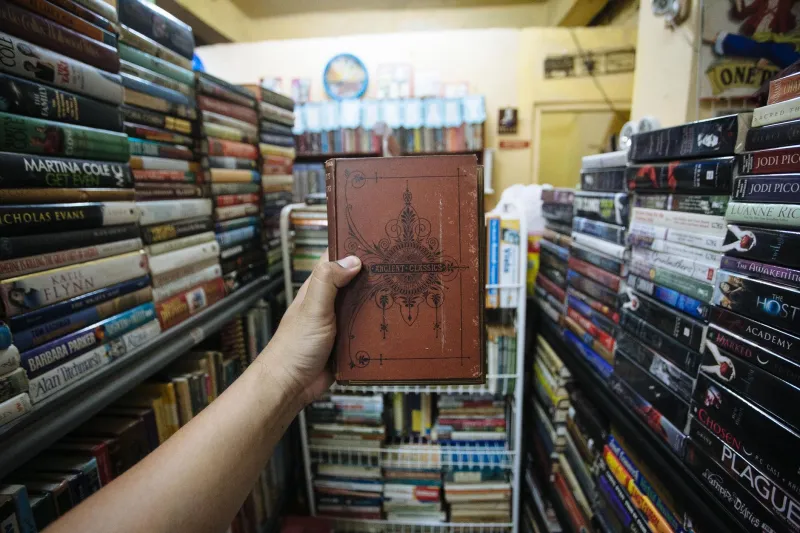
There is a particular kind of London bookshop that announces itself with a handrail. You see the sign at street level, a window of tidy hardbacks and a few cheerful tote bags, and then you notice the steps: narrow, carpeted, maybe a little steep, leading down to a room with low ceilings and the faint smell of old paper and radiator dust. That room is usually where the good stuff is.
Street-level bookshops are built to be read quickly. They have front tables, seasonal displays, staff picks with handwritten cards and a clear sense of what you are meant to want. Basement bookshops are built for the opposite: for the browser who has no particular title in mind, no deadline and no objection to spending forty minutes on a stool with a paperback they did not know existed. In a city that increasingly optimises its shop floors, the lower shelf remains pleasantly unoptimised.
The case for going underground
London rents being what they are, the basement has always been a useful piece of retail geography. It is cheaper, it is out of the way and it can hold stock that would clutter the ground floor. For second-hand booksellers, that makes it a natural home for depth: the academic remainders, the poetry pamphlets, the art monographs, the local history, the odd cult novels and the boxes that have not yet been sorted. The basement is not where the shop performs its taste. It is where the shop keeps its id.
That is why serious browsers tend to trust a downstairs room. You are not being sold a vibe. You are being allowed to rummage. The shelves are often crowded, the sections are sometimes approximate and the lighting is not designed for Instagram. But the chances of leaving with something unexpected are much higher. A basement shop does not ask you to want what everyone else wants this week. It asks you to look.
A short tour of London’s lower shelves
Bloomsbury: Skoob Books and the Marchmont Street run
Start with Skoob Books in the Brunswick Centre, a proper basement institution. The ceiling is low, the stock is deep and the academic shelves reward anyone who likes their fiction with a side order of philosophy or social theory. Nearby, Judd Books has its own lower-room energy: packed shelves, sensible prices and the distinct feeling that the shop has been assembled by people who read more than they tidy. Give yourself an hour, not fifteen minutes. Bring a bag with a flat bottom.
Charing Cross Road: Any Amount of Books
A few streets over, Any Amount of Books keeps a downstairs room that feels like a useful secret. The stock leans towards theatre, poetry, art and the kind of curious hardbacks that justify the journey. The stairs are steep and the shelves are full, so treat the descent as part of the browsing rather than an inconvenience. If you are looking for a gift for someone who has everything, this is the sort of room where a strange little find will do the job better than a new bestseller.
Peckham and south London: the improvised lower rooms
South of the river, basement bookshops are less likely to be famous names and more likely to be improvised. You find them behind cafés, under community spaces, in church halls and in the back rooms of shops that sell records, prints or coffee. The Review Bookshop on Bellenden Road is a good anchor for a Peckham book afternoon, and from there it is worth keeping your eyes open for the smaller lower rooms that do not advertise much beyond a sign in a window. Ask before you descend. The best ones usually appreciate a bit of notice.
What the lower shelves stock
Basement shops are where specialisms go to breathe. You will find strong sections in poetry, drama, art, architecture, academic criticism, local history and transport. You will also find the gloriously unsorted: a shelf of 1970s paperbacks next to a pile of exhibition catalogues, a box of Penguins with the prices pencilled inside, a single odd volume of a trilogy that someone else has clearly been hunting for since March.
This is not a lesser experience than the polished ground floor. It is a different one. The basement asks you to use your own judgment rather than follow a display. It rewards curiosity, patience and a willingness to crouch. It also rewards conversation: staff in basement shops tend to know exactly where the overflow is kept and which boxes have not yet made it onto the shelves. Ask them. They are usually the best search engine in the building.
The economics of the lower shelf
There is a wider point here about London’s book economy. Street-level space is expensive, so it is used for the things that sell quickly: new titles, gifts, cards, coffee, events. Basement space is cheaper, so it is used for stock. That division sounds mundane, but it shapes what kind of reading city we have. If every bookshop optimised its floor for the fastest possible sale, we would lose the rooms where odd stock waits for the right person. The basement is a small act of resistance against the idea that everything must be immediately legible, immediately desirable and immediately profitable.
It is the same instinct that makes a good library feel generous: the sense that not everything has been pre-selected for you. You are allowed to browse without buying, to change your mind, to discover something by accident. In 2026, when so much of our reading is recommended by an algorithm, that is worth protecting.
A browser’s code for the stairs
Check opening hours before you go; basement rooms often keep shorter days than the shop above. Carry cash, just in case. Do not block the stairs with your bag. Wear a layer you can take off, because basement heating is either off or alarming. Ask staff about the sections you cannot see. If you spend an hour browsing, buy something small if you can. And leave your phone in your pocket for a bit — the whole point of the lower shelf is that it makes you look up from the screen and down at the spines.
London reading is not only festivals, reading challenges and events with a waiting list. It is also the quiet business of going downstairs, pulling out a book you did not know you wanted and deciding, on the spot, to give it a home. The basement clause is simple: the best finds are often below eye level.