The Shelf Inspectors: A Roll Call of London's Bookshop Cats
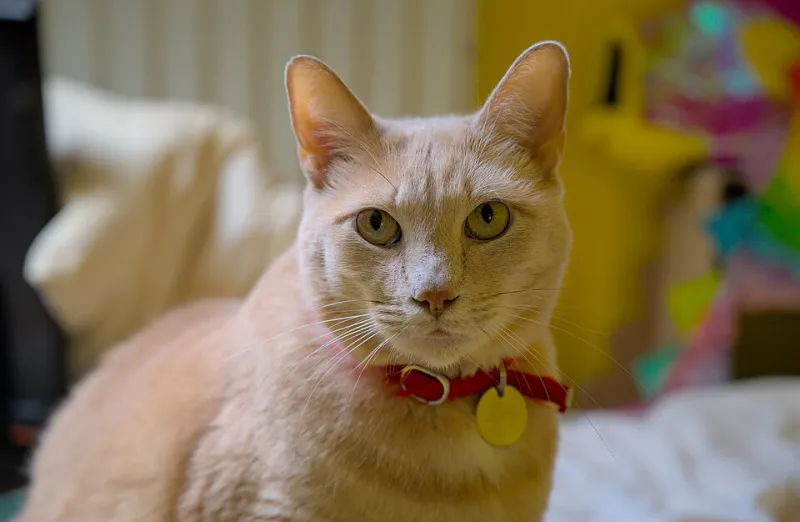
Photo: Trougnouf (Benoit Brummer), CC BY 4.0, via Wikimedia Commons
There is a particular sound a bookshop makes when a cat lands on a pile of remainders: a soft thump, a rustle of dust jackets, and the distinct impression that someone has been judged. In a city where retail is increasingly frictionless and forgettable, the bookshop cat is a small, warm act of resistance. It says: this is not a warehouse. This is a room with opinions.
Over several weeks in autumn 2026, CityRead London loitered in independent bookshops across the capital for what we are calling a census. It was not scientific. Nobody knows exactly how many cats live in London bookshops, because the cats are not filling in forms and the booksellers are too busy recommending novels to count. But the sample was wide, the biscuits were plentiful, and the findings were clear: the bookselling cat is alive, well, and usually asleep on the poetry.
Names have been changed where the cat requested it. Most of them did.
A neighbourhood roll call
Bloomsbury: Footnote. A ginger with a tail like a question mark, Footnote oversees the art history bay by lying across it. She has strong views on monographs and an even stronger view on being moved. Customers have learned to reach around her. She is not a deterrent; she is a filter.
Marylebone: Percy. An elderly tabby with the bearing of a retired editor, Percy works the till. He does not greet you so much as assess you. If he approves of your purchase, he will blink slowly. If he does not, he will wash a paw. Both responses are considered final.
Chiswick: Marmalade. Found in the children's section, which is exactly where a cat should be and exactly where a cat should not be during story hour. Marmalade specialises in sitting on the one board book a toddler has decided is their favourite. His publicist says he is 'good with people'. His publicist is a bookseller with a sense of humour.
Peckham: Luna. A sleek black cat who has claimed the poetry shelf as her personal fiefdom. She is unmoved by rhyme, indifferent to free verse, and deeply interested in the gap between two collections where a warm body can fit. Local poets have started writing about her. She has not read any of it.
Hackney: Bishop. Bishop is large, grey, and operates a strict appointment-only policy for lap time. He can usually be found near the second-hand crim
Greenwich: Nelson. A one-eared cat with a sailor's swagger and a fondness for the maritime history section. He has never been to sea. He has, however, knocked a model ship off a shelf twice, which the staff regard as a kind of review.
Hampstead: Watson. A fluffy ginger who greets customers at the door and then leads them, with maddening slowness, to the exact book they did not know they wanted. This is either intuition or a coincidence that has been going on for years. Either way, it sells books.
Brixton: Pearl. A small, serious cat who patrols the essay section and has been known to sit on the till receipt roll during busy periods. She is not helping. She is making a point about the pace of modern life.
Richmond: The General. A vast, unbothered tabby who has outlasted three shop cats before him and several economic downturns. He sleeps in the window. Passers-by stop. Some come in. This is called footfall, and The General has never had to attend a marketing meeting about it.
The etiquette of meeting a bookseller's cat
A bookshop cat is not a petting zoo. It is a colleague. Treat it accordingly.
- Ask first. 'Is the cat friendly?' is a better opening than a hand thrust into a sleeping animal's face. Booksellers know their cats. Trust them.
- Let the cat come to you. If it does not, that is the whole interaction. Enjoy it from a distance.
- Do not pick it up. You would not lift a bookseller mid-recommendation. Same principle.
- Watch the tail. A flicking tail is a review. A flattened ear is a rejection letter.
- Do not feed it. The cat is not starving. The cat is on a diet because customers keep feeding it.
- Buy something. You are in a shop, not a cat café. The cat is the welcome, not the business model.
What the cats are actually telling us
A bookshop cat is a small, furry handbrake on the rush. You cannot browse at speed when a tabby is asleep across the crime section. You cannot complete a transaction without acknowledging the animal on the till. The cat slows the shop down to the speed of conversation, which is the speed at which independent bookselling has always worked best.
There is a practical side, too. Cats are good company for staff who spend long days alone. They are a conversation starter for shy customers. They are a security system with a nap schedule. And they are a signal of stability: a shop that has a cat is a shop that plans to stay. You do not install a cat in a pop-up.
In 2026, with business rates still biting and online retail still looming, the bookshop cat has become a quiet emblem of what the independent trade offers that the algorithm cannot. A chain can offer three-for-two. An indie can offer a cat who has opinions about your choice of crime fiction. The cat cannot be price-matched. The cat cannot be replicated by a recommendation engine. The cat is, in its own indifferent way, a piece of local infrastructure.
So go and meet them. Buy a book, ask about the cat, let the cat make the first move. And if Footnote is asleep on the art history again, reach around her. She has earned the space.