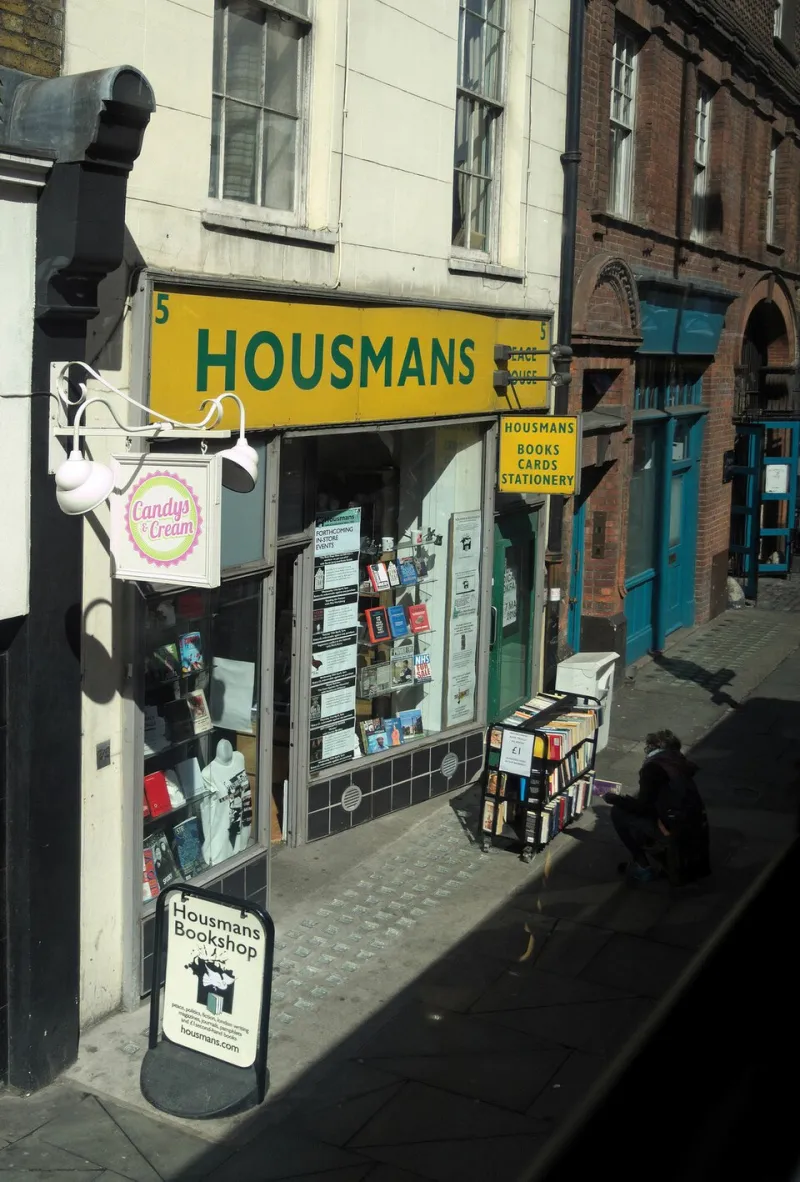
Chapter and Verse: A First-Timer's Field Guide to London's Bookish Speed-Dating Nights

It's 7:40pm on a Tuesday, the shop's till is closed and the crime table has been pushed against the wall to make room for eight small ones. You are sat opposite a stranger who has just asked what you're reading, and you have four minutes to make it count. Welcome to the bookish speed-dating night — part literary icebreaker, part social experiment, and one of the friendliest evenings the capital's book trade currently offers.
These events have been quietly multiplying across London. They turn up in independents from Bloomsbury to Brixton, in library friends' groups, in the upstairs rooms of pubs that smell faintly of old paper, and occasionally at the back of a bookshop café after closing. The premise is simple: short conversations, a book as the opening move, and no obligation to pretend you've read Ulysses.
How the nights actually work
Formats vary, but the skeleton is consistent. Twelve to twenty people turn up, usually with a fairly even gender split though few nights enforce one. Half sit, half rotate. A bookseller — or a volunteer armed with a very loud timer — rings a bell every three to five minutes and the seated half stays put while everyone else moves one chair along.
Some nights add structure. There's the 'shelf summary' version, where you arrive with three titles written on a card and work through them. There's the 'blind date with a book' round, where wrapped paperbacks are swapped and discussed before anyone gets to the introductions. One Bloomsbury night runs a wildcard round in the final twenty minutes where the timer is abandoned entirely and you're trusted to self-regulate, which is either the best or worst idea in London depending on your tolerance for conversation.
Expect to pay between £8 and £16, sometimes with a drink included, sometimes with a raffle for a signed hardback. Ticketing tends to happen through shop newsletters and Eventbrite rather than big-budget promotion, which is why these nights sell out before you've heard of them.
The book is the icebreaker, not the exam
The single most common first-timer mistake is treating the book as a test you can pass or fail. It isn't. Nobody is scoring your recall of publication dates, and the person opposite you will not be impressed that you know which translator you prefer.
Good questions do the work: What did it do to you? Did you finish it? Who would you hand it to next? What's the last thing you abandoned, and why? These open up a real conversation rather than a quiz. Bad questions — and they arrive in most first rounds — are the ones that assume a shared canon. Not everyone at the table read English at university. Many didn't read at all until a few years ago. The nights are more interesting when that's acknowledged out loud.
A useful rule of thumb: one book you loved, one book you couldn't finish, one you're looking forward to. That's a whole personality in three titles, and it takes about ninety seconds to deliver. The remaining two and a half minutes are for listening, which is genuinely the rarer skill on the circuit.
Also worth saying: you are allowed to say you only read thrillers. You are allowed to say you read the same novel every winter. Enthusiasm is far more attractive than range.
Where to find them across the capital
The geography is pleasingly spread out. Bloomsbury and the Marchmont Street area, with its cluster of independents, is the reliable centre of gravity. Brixton has a livelier, younger crowd, often with a genre-matching twist in the second half. Marylebone and the streets around Lamb's Conduit host smaller, quieter versions that skew towards people who take a tote bag with a structural integrity requirement. King's Cross bookshops on the water run occasional summer editions, and south-east London — Sydenham, Herne Hill, Dulwich — has a growing set of nights tied to local bookshop communities.
Don't overlook the library side. Friends-of-library groups in Lambeth, Southwark and Tower Hamlets have been running bookish social evenings on the back of their reading groups, usually free, usually with tea, and usually with a slightly wider age range than the commercial versions. Your local branch's noticeboard — physical, paper, slightly curling at the corners — remains the best listings service in the city.
Does shared taste actually lead anywhere?
Honestly? The evidence is mixed, and anyone who tells you otherwise is selling something.
Organisers report that follow-up contact is high — most people swap at least one recommendation before the night ends — but the conversion rate from 'we both love Hilary Mantel' to a second meeting is far lower than the conversion rate from 'we both agreed that a specific novel was overrated'. That's an odd but consistent finding: shared taste is a pleasant coincidence, while shared scepticism is a conversation. Some nights produce friendships and book-club spin-offs. A smaller number produce actual dates. Almost all of them produce a reading list that runs to fifteen titles by the following weekend.
So go with modest expectations and a generous spirit. The reading list is the guaranteed return.
A first-timer's checklist
- Bring one paperback, not a trilogy. It needs to fit in a pocket and survive being waved about.
- Write three titles on a card. Loved, abandoned, up next. It removes the blank-mind panic.
- Take a pen. You'll be writing down other people's recommendations much more than you expect.
- Carry cash. Not every bookshop takes card for the raffle, and the honesty-bar tin is not a contactless terminal.
- Keep your phone in your bag. The whole point is that nobody is being compared to a better version of themselves on a screen.
- Give everyone a full answer. Three minutes is short enough already without half of it going to the word 'yeah'.
- Be honest about not finishing things. It is the fastest route to a real conversation on the circuit.
The morning after
Most nights operate a mutual-match system: you tick who you'd like to hear from, the organiser circulates the overlaps within a couple of days, and nothing happens unless both boxes are ticked. No public lists, no awkwardness at the next event.
If you do get a match, skip the 'hey, nice to meet you'. Send the title you mentioned and a single line about why. It's the closest thing this city has to a perfect opening message, and it means the conversation starts where the night left off — mid-sentence, halfway down a paragraph, and happily unrehearsed.