The Sorting Table: One Donated Novel’s Journey Through London’s Book Economy
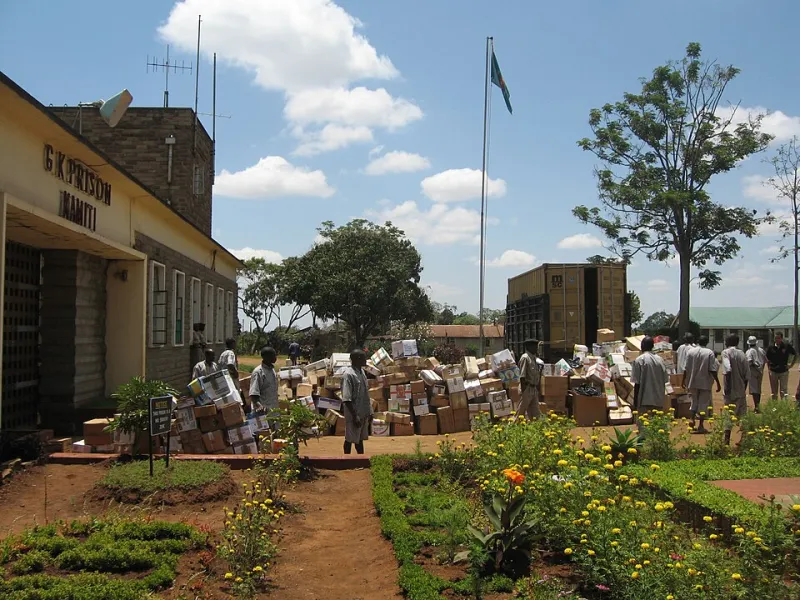
Photo: Adamesmith, CC BY-SA 3.0, via Wikimedia Commons
On a damp Tuesday this November, a paperback thriller is left in a donation bag outside a charity shop in north London. It has a cracked spine, a faded bookshop sticker and a bookmark from a forgotten holiday. Within an hour it will be on a sorting table. Within a week it could be on a shelf in Peckham, in a library sale in Brent, or in a pulping bin bound for a recycling plant outside the M25. The journey is rarely glamorous, but it is more interesting than most donors imagine.
The bag on the doorstep
Charity shops are not a single, tidy system. They are a patchwork of local managers, volunteer sorters and regional warehouses, all trying to turn generous clutter into sellable stock. A book’s first test is brutally simple: will someone pay for it? Condition matters, but so do title, cover and timing. A pristine hardback of a forgotten celebrity memoir may sit for months. A scuffed paperback of a much-loved crime series can leave the shop in an afternoon.
Our thriller has a few advantages: it is a known author, the spine is intact and the pages are dry. It is not mouldy, annotated in biro or missing its title page. That already puts it ahead of a surprising number of donations. The shop’s volunteer gives it a quick wipe, checks for loose inserts and puts it in the “good” pile. A bookmark falls out — a receipt from a supermarket in Croydon — and goes in the bin. The book does not.
Sorting table: the first cut
At the back of the shop, the sorting table is where the romance of donation meets the reality of retail. Books are divided into rough camps: likely sellers, possible sellers, library-sale stock, swap-shelf stock and recycling. The “likely” pile goes to the shop floor. The “possible” pile may go to a specialist bookshop or a bigger charity branch. The rest begins to look less like literature and more like paper.
Charity warehouse staff are blunt about this. “We are not a rubbish tip with a nice sign,” one sorter tells me, not unkindly. “If it is wet, mouldy or falling apart, we cannot sell it. And if we cannot sell it, we still have to pay to get rid of it.” That is the bit donors rarely see: the cost of handling books that should never have been donated. Mouldy paperbacks can contaminate otherwise good stock. Encyclopaedias and outdated textbooks are heavy, bulky and hard to shift. Boxes left after hours can be ruined by rain before anyone opens the door.
The library sale pile
Our thriller does not go straight to the shop floor. It is a duplicate — there are already two copies — so it is boxed up for a library sale. Across London, Friends of Libraries groups run regular sales of withdrawn stock and donated books. These sales are quietly brilliant: cheap, chaotic and full of readers who know what they are looking for. A 1970s Virago paperback might go for £1. A battered cookbook might be bought by someone furnishing a first flat. A children’s annual might be rescued for the pictures.
The library sale is also a second sorting table. What sells here is not the same as what sells in a charity shop. Local readers may be hunting for specific genres, local history or cheap holiday reads. Unsold stock is often boxed up again and offered to another sale, a community group or a recycling scheme. The book is now on its third life, and it has not even left the borough.
When a book becomes pulp
Not every donation finds a reader. Books that are damp, damaged, obsolete or simply unsellable are sent for pulping or recycling. In London, that can mean a kerbside collection, a reuse and recycling centre, or a specialist paper recycler. The exact route depends on the borough and the condition of the book. Hardbacks may need their covers removed; paperbacks are often accepted with household paper recycling. What they should never be is “wishcycled” — put in the wrong bin in the hope that someone, somewhere, will sort it out.
Pulping is not a tragedy. It is a sensible end for a book that cannot be read. The tragedy is a box of good books left to rot in a doorway, or a charity shop paying to dispose of stock that a donor could have recycled at home. The sorter’s rule of thumb is simple: if you would not give it to a friend, do not give it to a charity shop.
The swap shelf wildcard
Our thriller’s story takes an unexpected turn. At the library sale, it is bought by a reader who takes it on the train, finishes it in three days and leaves it on a community book swap shelf in a Lewisham café. From there it is picked up by a night-shift worker, then passed to a phone-box library in Hackney. It is now a minor object of local folklore: a book with three bookmarks, two coffee rings and a faint smell of someone else’s hand cream.
Community book swaps are the wildcard of London’s book economy. They are free, informal and gloriously unpredictable. They also need care. A swap shelf is not a dumping ground for damaged stock. If a book is mouldy, ripped or unwanted everywhere else, it is not a gift to a community space — it is a chore. The best swap shelves are curated by someone who checks them regularly and removes the books that no one wants.
What charities wish you knew
Donors are generous, but generosity needs a little admin. Charity shops and warehouses wish more people knew a few basic things. Books should be clean and dry. Boxes should be carried in during opening hours, not left outside. Call ahead if you have more than a couple of bags. Remove personal papers, photos and bank cards. Do not donate encyclopaedias, old textbooks, magazines or damaged stock unless the shop has specifically asked for them. And please, please do not use the donation bag as a way of avoiding a trip to the recycling centre.
How to donate, swap or recycle in 2026
If you want your books to find a second reader, sort them first. Good-condition fiction, children’s books and recent non-fiction are usually welcome at charity shops. Specialist bookshops may take art, design or academic titles. Library sales and community swaps are ideal for quirky, old or local-interest books. For damaged stock, check your borough’s recycling rules or take it to a reuse and recycling centre. If in doubt, ask before you hand over a box. A few minutes of sorting can save a volunteer an hour — and give a novel like ours a better chance of ending up in someone’s hands rather than a pulping bin.