Stitched Back Together: The Volunteers Rescuing London's Broken Books
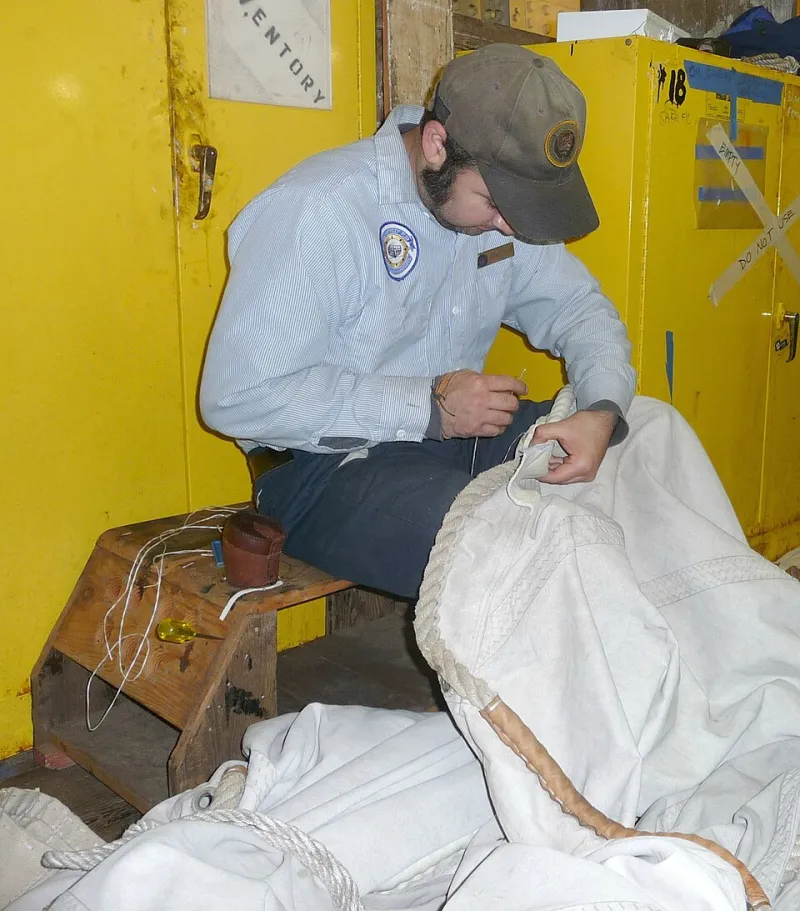
Photo: NPS, Public domain, via Wikimedia Commons
There is a particular smell to a book repair session: PVA glue, old paper, and the faintly biscuity tang of wheat starch paste. It hits you on the stairs. Up in a library meeting room on a Tuesday evening, four tables have been pushed together, a lamp has been angled over each one, and a queue of people is forming — each clutching something broken.
A paperback with its cover hanging off by a thread. A hardback whose spine has detached like a shed door. A water-stained cookbook that survived a kitchen flood but not the drying out. A child's picture book, chewed at one corner, that a parent would very much like to hand on intact.
This is a book repair café: part craft workshop, part drop-in clinic, part quiet act of resistance against the throwaway. They have been quietly multiplying across the capital, usually run by volunteers, usually free, and almost always full.
The triage table
The first thing that happens is not repair. It's assessment. A volunteer — often a retired conservator, a bookbinder who does this for fun, or a library assistant who has picked up the skills on the job — takes the book, opens it gently, and gives a verdict.
"People arrive apologising," says Marguerite, a former conservation technician who now runs a monthly session in a north London library. "They say, 'I know it's not valuable.' But that's not the point. A book can be worth nothing on the market and still be the most important object in someone's house."
The triage question is simple: can this be stabilised in twenty to forty minutes with the tools on the table? If yes, it gets fixed on the spot. If no, it gets triaged elsewhere — to a proper conservation service, to a specialist binder, or, occasionally, to the recycling bin with a sympathetic explanation.
What actually gets saved
The kit is humbler than you'd expect. Bone folders. A stack of Japanese tissue paper. Linen thread and a curved needle. Small pots of wheat starch paste, made fresh that morning. Book presses improvised from two chopping boards and a couple of bricks. And a lot of wax paper.
Most of the work falls into a few categories:
- Reattaching a cover. The classic. A line of PVA along the hinge, a strip of tissue to reinforce it, wax paper between the pages, and a spell under the bricks.
- Torn pages. Japanese tissue and paste, applied from the back, invisible from the front.
- Detached boards on a hardback. A slightly more involved job — the spine lining is lifted, new mull is inserted, and the board is re-hinged.
- Broken spine cases. The book block is separated from its casing, the case is repaired, and the whole thing is reassembled.
- Water damage. Only if it's recent and not mouldy. Pages are interleaved and dried flat under weight, which takes days rather than minutes.
What cannot be saved, at least not at a trestle table: anything with active mould (a health hazard, and it spreads to the rest of the collection), insect damage that has gone structural, books of genuine monetary value, and anything that has been sitting damp in a bag for six weeks.
And then there are the repairs that volunteers have to gently undo. Sellotape, that great enemy of the paperback, yellows and embrittles and takes the printed surface with it. Pritt stick fails. Lamination is irreversible. "We can sometimes remove tape," says one volunteer, "but it's slow, it's not always successful, and it's the reason we always say: bring it to us before you reach for the sticky tape."
The people in the queue
A repair café is a good place to overhear a city's reading life. There's the man with his grandmother's wartime cookbook, held together with a rubber band. There's a teenager with a much-loved fantasy paperback whose cover has departed entirely — she wants it fixed, not replaced, because it's the copy she read on a school trip. There's a librarian from a nearby branch with a canvas bag of stock, because library books get read hard and budgets don't stretch to rebinding.
And there's usually someone who has come just to watch, and ends up staying to learn how to fold a paper corner properly.
Where to take your battered books in 2026
Sessions are volunteer-run and timings shift, so always check the library's own listings before you travel. Book repair cafés and mending meet-ups are currently running, or have run recently, at libraries and community centres including:
- Islington — Cat and Mouse Library, and periodic sessions at Islington Central
- Hackney — Dalston CLR James Library
- Tower Hamlets — Idea Store branches, including Chrisp Street
- Southwark — Canada Water Library
- Lambeth — Brixton Library
- Camden — Kentish Town Library
- Waltham Forest — Leytonstone Library
- Greenwich — Woolwich Centre Library
- Ealing — Northfields Library
- Haringey — Wood Green Library
- Wandsworth — Battersea Park Library
- Croydon — Thornton Heath Library
Most operate monthly or fortnightly, often on a weekday evening or a Saturday morning. Some ask you to book; many are drop-in. A few ask for a small donation towards materials.
Bring the bits
One piece of etiquette above all others: bring every loose fragment. The torn corner, the detached page, the strip of spine that came away on the bus. A repair is much easier when the pieces are in an envelope rather than lost down the side of a sofa.
And bring a little patience. These are volunteers, the queue moves at the speed of a drying press, and nobody is going to be rushed through a hinge repair by a man checking his watch.
What the repair cafés offer isn't really bookbinding. It's a second reading life for the books Londoners can't quite let go of. Which is, when you think about it, the whole point of a library.