Who's Waiting for What: Inside London's 2026 Borrowing Charts
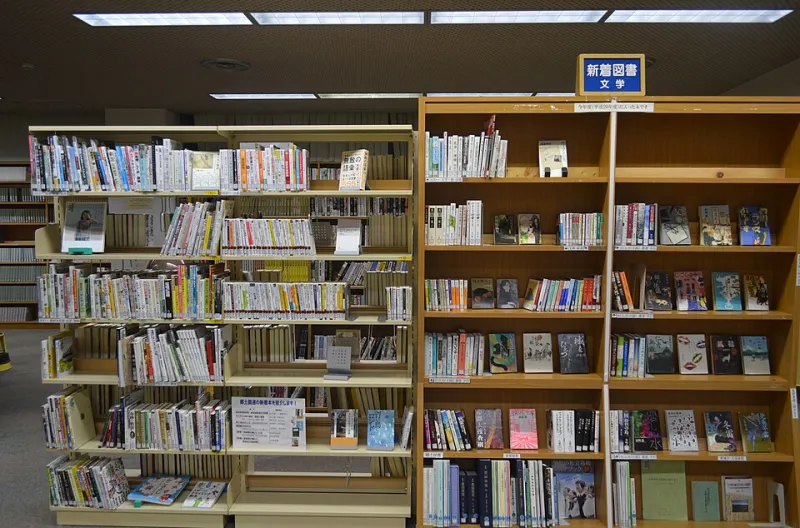
Photo: Asturio Cantabrio, CC BY-SA 4.0, via Wikimedia Commons
Every London library service runs on a queue. Not the one at the counter — the invisible one, made of holds, reservations and the cheerful little email that says your book is ready to collect. Bestseller charts tell you what publishers sold. The hold list tells you what a city actually wants, and it's a much stranger, more local document.
So with a couple of months of 2026 still to run, we asked library staff across the capital a simple question: what are Londoners waiting for? The answers were less about hype than you'd think, and rather more about bus routes, heating bills and book clubs.
The short version: what London borrowed
Across the boroughs we spoke to, the shape of the year looked remarkably consistent at the top and wildly different underneath. Broadly, four things happened:
- Literary fiction with a postcode lead. Novels with a strong sense of place kept their grip on inner-London reservation lists, with titles like The Hampstead Fault and Low Tide at Woolwich generating the kind of queues normally reserved for celebrity memoirs.
- Cosy crime and psychological thrillers ran the outer boroughs. The further you get from Zone 1, the more the holds skew towards series fiction — the second and third books in particular, as readers who discovered book one in 2025 came back for the rest.
- Children's chapter books and YA had the steepest growth of anything. Not slightly steeper. Steeply. School reading challenges, the summer reading challenge and a wave of nine-to-twelve-year-olds with their own library cards did the heavy lifting.
- Practical non-fiction quietly held its ground. Money, sleep, cooking on a budget, small-space gardening, DIY. The kind of books that get borrowed rather than bought.
One pattern cut across all four categories: audiobooks. Digital lending has been climbing for years, but staff described 2026 as the year e-audio stopped being the second-choice format and started being the point. "We've got commuters who borrow six audiobooks a month and haven't physically been in the building since March," says one digital services lead at a south London borough. "They're still our members. We just see them differently."
A waitlist map of the capital
Here's where it gets interesting. London isn't one reading public, and the hold data proves it.
In boroughs with high numbers of commuters and a big literary-programming calendar, reservation lists behaved like a festival lineup — a small cluster of buzzy titles with 40-plus people waiting and everything else moving briskly. In boroughs with more families and fewer bookshops per square mile, the queues were longer and flatter: dozens of titles with eight or ten people in line, spread across series fiction, revision guides, picture books and practical how-to.
"People assume everyone in London wants the same six books," says Priya Nair, a collections librarian in north-east London. "We don't buy for the city. We buy for our streets. If I see a run on one title in one branch and nothing in another three miles away, that's not a fluke — that's two different neighbourhoods reading two different lives."
Digital holds reinforce the point. Because e-book copies expire after a set number of loans, popular digital titles develop queues that look dramatic on paper and clear quickly in practice. Staff described a constant balancing act: buy more copies of the thing everyone wants now, or spend the budget on the eighty titles that will be borrowed steadily for three years. Most libraries, sensibly, do a bit of both.
Why 2026 skewed practical
Nobody we spoke to was surprised that the practical shelves were busy. The library, as one branch manager in Brent put it, is "the last free warm room in the neighbourhood" — and that shapes borrowing in very direct ways. A book about cutting energy costs is not an abstract interest if your flat is cold.
But there was a softer factor too. The cost of a night out has pushed people back towards borrowing as entertainment rather than utility. Reading a novel you didn't pay for, then talking about it in a group that costs nothing to attend, is a genuinely good deal in a city where a cinema ticket and a pint will set you back the price of a hardback.
"We've had people join for the heating and stay for the crime section," the Brent manager said. "That's not a failure. That's the job."
The book club bounce
If there's one mechanism that explains the year's most dramatic jumps, it's the group read. A title picked by a book club, a workplace reading group or a well-followed online book club doesn't trickle — it spikes. Staff described reservations arriving in clusters of ten or twelve over a single weekend, followed by a second wave once the meeting happened and everyone who'd skipped it decided to catch up.
Libraries have learned to anticipate it. Several boroughs now run their own reading groups with a dedicated set of multiple copies kept out of general circulation, precisely so that thirty people can read the same book at the same time without thirty separate holds clogging the system.
The people doing the buying
Collections work is unglamorous and highly skilled. Buyers watch reservation ratios, monitor how quickly a title falls off the shelves, and weigh a dozen competing pressures: local demographics, curriculum needs, large-print and accessible-format requirements, and the plain fact that a branch with a tiny front table can only display so much.
"There's no algorithm doing this," Nair says. "There's a person with a spreadsheet, a budget and a strong opinion about what a good reading life looks like. We get it wrong sometimes. But we get it right far more often than people realise."
Sidebar: what to borrow next
A few ways to work the hold list in your favour over the next few months:
- Borrow the previous book first. If a series title has a long queue, the earlier instalment is usually free. Staff call this the "series backdoor" and it works.
- Ask about the reserve stock. Many boroughs keep extra copies for reading groups. If your hold is dragging, a librarian can sometimes point you to a faster route.
- Check the e-audio shelf on a weekday morning. Digital holds clear fastest mid-week, and a lot of members only browse at weekends.
- Try the format nobody wants. Large print and audiobook on CD (yes, really) sit unborrowed while everyone waits for the paperback.
- Order through the whole consortium. Your card often reaches further than your borough's catalogue. Worth asking what your service is linked to.
The city, in reserve
A hold list is a fairly honest portrait. It shows a capital reading crime on the train and budgeting guides at the kitchen table, parents chasing the next book in a series, teenagers discovering audiobooks at 11pm, and a great many people waiting patiently for something everyone else has already read.
It isn't a chart of what London is buying. It's a chart of what London is curious about — which is a far better thing to measure.