Boxes of Stories: A Wanderer’s Guide to London’s Pavement Libraries
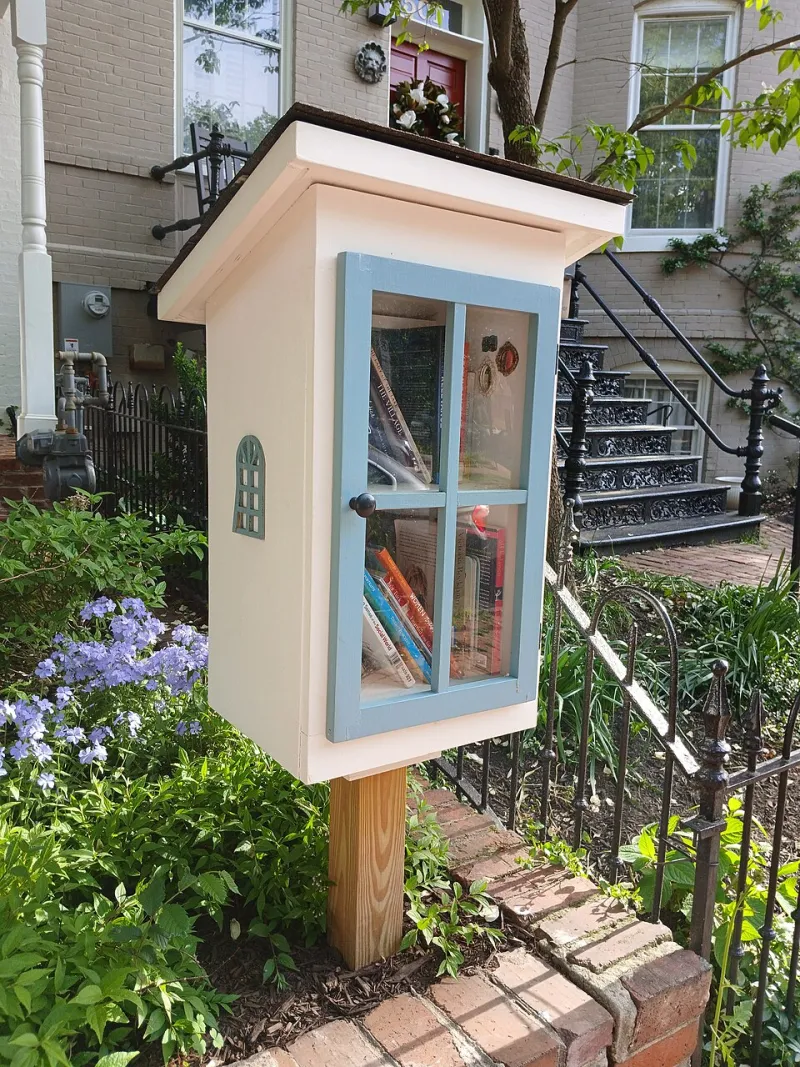
Photo: Ser Amantio di Nicolao, CC BY-SA 4.0, via Wikimedia Commons
On a damp Saturday in November, I stood outside a terraced house in Leytonstone, peering into a wooden cabinet the size of a doll’s house. Inside: a battered Val McDermid, a children’s atlas, a slim book of essays about walking, and a handwritten note that said: ‘Take one. Leave one. No need to knock.’ There was no barcode, no due date, no security tag. Just a little library doing its quiet thing in the drizzle.
These are the spaces that sit outside the formal library network — the front-garden book swaps, the old phone boxes turned into shelves, the community cupboards bolted to church walls and pub corridors. In 2026, they are everywhere if you know where to look, and they tell you something revealing about how Londoners actually share books: casually, locally, and with a surprising amount of care.
The cabinet, the phone box and the shelf by the gate
Micro-libraries are not one thing. Some are registered Little Free Libraries with a painted sign and a steward’s email address. Some are rogue shelves in a front garden, stocked by a household that simply got fed up of tripping over paperbacks. Some are community book exchanges in cafés, community centres or railway stations. The common thread is scale: a few dozen books at most, chosen by whoever happens to look after the box that week.
That means the stock is gloriously uneven. One week you’ll find a Booker winner; the next, a dog-eared airport thriller and three copies of the same diet book. The best boxes have a personality — crime-heavy, poetry-heavy, heavy on children’s picture books because the local primary school runs past it every morning.
Three routes worth your Oyster card
You do not need a formal trail to enjoy these. But if you fancy a purpose to your weekend walk, these loose routes across several boroughs are a good place to start. Check before you go: stewards rotate stock, and some boxes close up in heavy rain.
Waltham Forest to Hackney
Start in the quieter streets between Walthamstow and Leytonstone, where front-garden cabinets often lean towards literary fiction and local history. From there, a bus or a long walk down to Hackney will bring you past community shelves in cafés and church porches. The Hackney stretches are patchier, but the good ones are excellent — think poetry, small-press fiction and a surprising number of books about cycling.
Islington to Haringey
From Highbury towards Finsbury Park and up to Wood Green, the little libraries tend to be tucked into front walls and beside front doors rather than advertised on maps. This is a route for nosy walkers: look for the small painted signs, the perspex doors, the shelves attached to railings. One of the pleasures is the mix — a box in Islington might be all middle-class cookbooks and literary prizes; a box in Haringey might have a full run of crime paperbacks and a stack of children’s annuals.
Lambeth to Lewisham
Heading south, the phone-box library is the star turn — a repurposed red box with shelves where the payphone used to be. Around Herne Hill, Honor Oak and down towards Lewisham, you’ll also find front-garden cabinets that are clearly loved: dry, tidy, with a little sign asking you to close the door firmly. This is a good route for a Saturday, ending near a café where you can inspect your haul.
What the stewards know
Maya, who looks after a cabinet in Leytonstone, told me she started it because she was tired of taking bags of books to charity shops. ‘I wanted a place where books could just move around the neighbourhood,’ she said. ‘People take one on the way to the Tube and bring one back a month later. Or they don’t bring one back. That’s fine too.’
Colin, who keeps a shelf in Haringey, has a more pragmatic approach. ‘The rule isn’t really take one, leave one,’ he said. ‘It’s don’t be a hoarder. Don’t dump a whole box of encyclopaedias on me in the rain. Don’t leave mouldy paperbacks. Apart from that, help yourself.’
Priya, in Lewisham, says children’s books vanish first. ‘Picture books go in a day,’ she said. ‘Then crime. Then anything with a pretty cover. The books that sit there for months are usually the ones nobody wants to admit they’ll never read — big biographies, old travel guides, anything with a sticker from a lost holiday.’
The stewards are not just stock controllers. They are curators, weather-watchers and sometimes informal counsellors. People stop to chat. Someone asks whether the box is free. Someone else says they used to have one just like it in another borough. The box becomes a tiny civic front room, a place where a neighbour can say hello without knocking.
The etiquette bit (please read)
There is no official rulebook, but the unwritten etiquette is fairly consistent. Take a book even if you have not brought one — the whole point is circulation, not a strict swap. Leave one when you can, but do not treat the box as a rubbish tip. Keep it tidy: close the door, don’t cram books in until the hinge groans, and don’t rearrange someone else’s careful display.
Children’s books are welcome, especially in areas where families walk past. So are paperbacks, hardbacks and graphic novels. What tends to annoy stewards: damp books, ripped covers, old magazines, and anything that looks like it has been in a shed for fifteen years. If a book is mouldy or falling apart, recycle it rather than leave it for someone else to deal with.
And if you are thinking of starting your own, ask first if it is going on a shared wall or pavement. A front-garden box is usually straightforward; a box on the public highway may need a conversation with the council. Keep it dry, keep it small, and put a little sign on it explaining what it is. That is most of the job.
Why the little libraries matter
These boxes are not replacing the formal library network. They cannot lend you a laptop, host a reading group or order in a book from another borough. But they do something else: they lower the barrier. You do not need a card, a PIN or a reason. You just need to be walking past.
In a city that can feel transactional, the front-garden book swap is a small act of trust. Someone has put a shelf outside their house and decided that their neighbours are probably all right. The books are not precious, but the gesture is. Take a book. Leave a book. Say hello.