Listen Up: Why Londoners Are Queueing to Be Read To

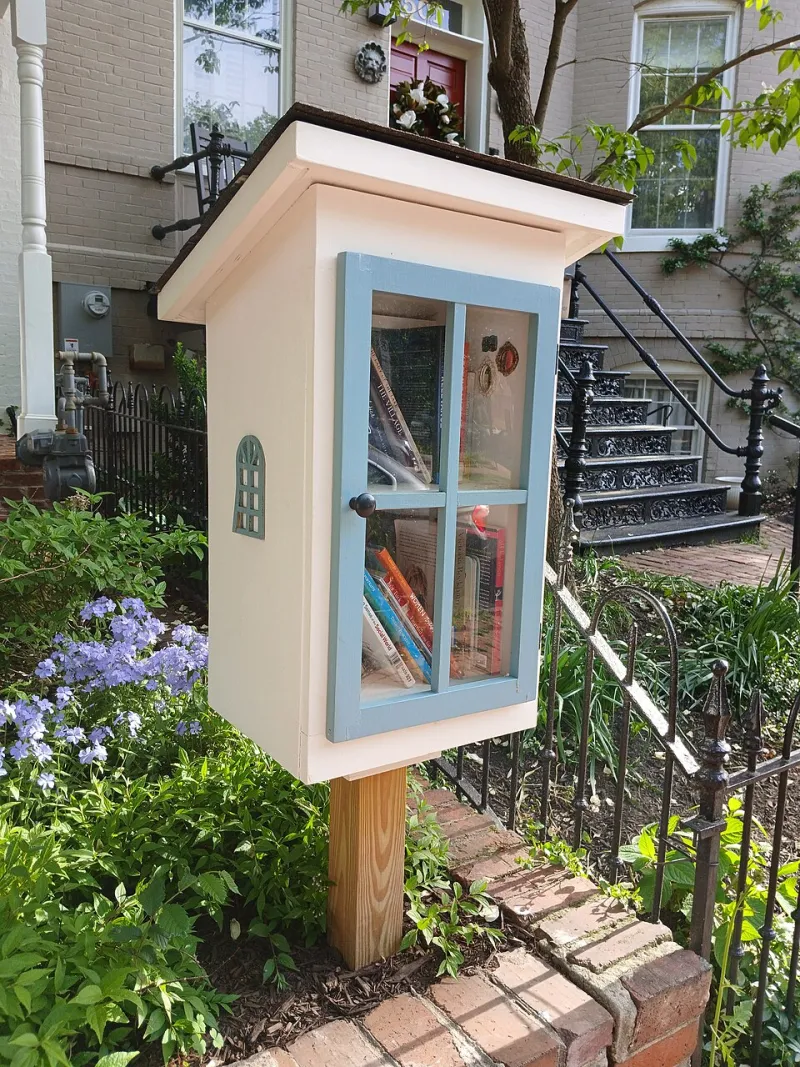
Photo: Michael Coghlan from Adelaide, Australia, CC BY-SA 2.0, via Wikimedia Commons
It is 7.30pm on a Thursday in November, and the upstairs room of a pub in south-east London is full. Not packed in a raucous way — no one is standing on chairs or shouting over a band. Forty adults are sitting with drinks on their laps, phones face down, listening to a woman in a corduroy jacket read a short story about a man who accidentally joins a choir. When she finishes, the room exhales. Someone says ‘again’ and everyone laughs.
This is a grown-up story hour: a read-aloud club for adults, with no workshop, no critique and no requirement to have read anything beforehand. In 2026, the format is quietly booming across London — in library meeting rooms, community halls and pub back rooms — and it is drawing in people who might never join a traditional book group.
From silent nights to shared listening
If you have been to one of London’s silent reading nights, you will know the appeal: a room full of people, all reading their own books, together but separate. The grown-up story hour flips that. There is one voice, one text, and a shared experience of listening. You do not need to have brought a book. You do not need to have an opinion. You just need to sit still for forty-five minutes.
Organisers say the format appeals to people who are tired of screens but also tired of being asked to perform. ‘A book group can feel like homework,’ says Nadia, who runs a monthly story hour in Lewisham. ‘You have to read the book, remember the plot, come up with something clever to say. Here, you just listen. That is the whole job.’
Why it works: attention, company and a good voice
There is something deeply soothing about being read to. As children, we associate it with bedtime, safety and someone else taking charge of the story. As adults, we rarely get the chance. A story hour offers that pleasure back, but with adult material — short stories, novel extracts, essays, sometimes poetry.
The wellbeing effect is not complicated. Listening to a story requires a kind of attention that is different from scrolling or even reading. It is linear, paced and shared. You cannot skip ahead. You cannot check your email. You are in a room with other people, following the same sentences at the same speed. For an hour, the world narrows to a voice and a tale.
Regulars talk about the social side too. Tom, 38, had not been inside a library for years before he went to a story hour in Camden. ‘I went because a friend dragged me along,’ he says. ‘Now I go every month. I have borrowed more books in the last year than in the previous ten. It made the library feel like a place I could use again.’
The people making it happen
Nadia started her story hour in a community hall with twelve people and a borrowed PA system. Now it runs in the local library and regularly fills the room. ‘I wanted a space where nobody had to have read the book,’ she says. ‘We get retired people, shift workers, students, parents who have escaped bedtime for one night. The mix is the point.’
The readers are not always actors. Some are librarians, some are volunteers, some are local writers testing out a piece. The best ones, Nadia says, are the ones who love the story and do not over-perform it. ‘You want someone who can hold the room without doing a hundred voices. It is closer to storytelling than theatre.’
In Hackney, a pub story night has become a fixture on Sunday evenings. The landlord was initially sceptical — ‘I thought it would be quieter than a quiz’ — but now says it brings in a different crowd. ‘People come early, order food, stay for the reading, then go home. It is a nice way to end the weekend.’
How to find one near you
The simplest place to start is your local library. Ask at the desk, check the what’s on board, or look at the library’s newsletter. Many story hours are run by friends’ groups, community organisations or individual volunteers, and they do not always have a big online presence. Local noticeboards, church halls, community centres and pub listings are all worth a look.
Search terms like ‘read aloud club’, ‘story hour for adults’ and ‘listening room’ can help, but word of mouth is often better. If you find one, go early: rooms are usually small and capacity is limited. Most are free or ask for a small donation towards refreshments.
How to start your own (without it becoming a book club)
Starting a story hour is not complicated. Find a quiet room in a library, pub or community hall. Pick a regular time — monthly is plenty. Choose two or three short pieces that work aloud and read them yourself before the event. Keep it to 45–60 minutes. Do not schedule a discussion afterwards unless people ask for one.
The practical bits matter. Check with the venue about noise and access. If you are charging entry or streaming the event, check the licensing position with the venue before you build a programme around copyrighted work. For small, private, free gatherings, organisers often read published extracts without drama, but it is worth being careful.
And resist the urge to turn it into a workshop. The magic of a story hour is that nobody has to be clever. You are not there to analyse. You are there to listen.
The quiet carriage has a companion
Silent reading nights are still wonderful. They offer solitude in company. But the grown-up story hour offers something different: company in a story. In a city that can feel noisy and distracted, there is something quietly radical about a room full of adults doing nothing but listening to a voice.
Bring a friend, bring a cushion, bring nothing at all. Just be there by 7.30pm. The story will do the rest.