Mind the Gap, Open the Book: A Line-by-Line Guide to London Reading in 2026
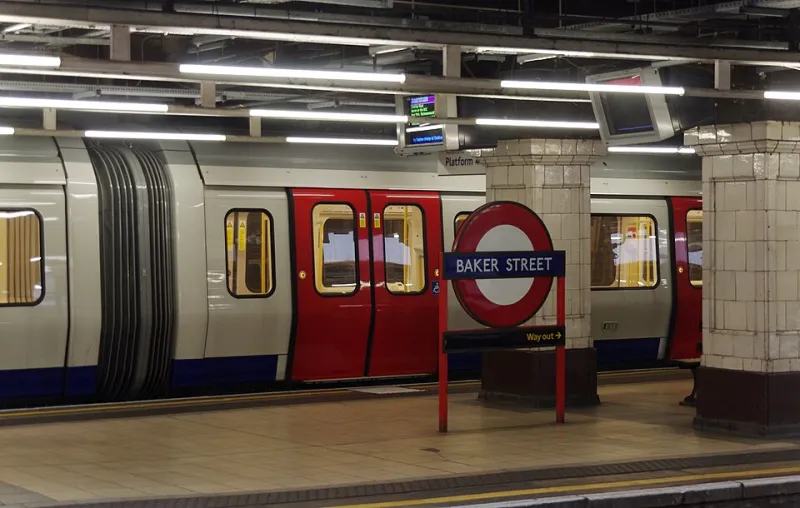
Photo: mattbuck (category), CC BY-SA 3.0, via Wikimedia Commons
There are two kinds of London commuters: those who stare at the departure board and those who have already opened a book. This year, why not join the second group? The tube is not exactly a library reading room, but it is one of the city’s great accidental reading spaces — a moving, humming, occasionally overcrowded place where a good book can turn a delay into a chapter.
So here is a challenge for 2026: read your way round the Tube. Not literally on every line in one day (though good luck), but line by line, mood by mood. Match the rhythm of the railway to the rhythm of your reading. Below is a suggested pairing for each line, plus a nearby spot to browse, sit or swap notes with a fellow reader.
Piccadilly line: short stories for scattered attention
The Piccadilly is long, deep and full of tourists asking whether this train goes to Heathrow. It rewards brevity. Pack a short-story collection — try The Penguin Book of the British Short Story, or any anthology you can dip into between stops. A story that ends before Hammersmith feels like a small victory.
Reading spot: Head to Hatchards on Piccadilly for a browse, or find a bench in Green Park and read the first page of three different stories before choosing one.
Central line: an absorbing doorstop
The Central line is the commuter’s express: fast, hot, relentless. You need a book that swallows you whole. Paul Murray’s The Bee Sting is a proper doorstop — funny, sad and impossible to put down when the train stops outside Liverpool Street. A long novel makes a crowded carriage feel like a private room.
Reading spot: Libreria near Spitalfields is a lovely place to start, all mirrors and curious shelves, before you dive underground.
Overground: quiet essays for the overground mind
The Overground, especially the orbital route, is the closest thing London has to a moving reading room. It is slower, brighter and less shouty. Essays suit it: Ross Gay’s The Book of Delights, or a slim collection of London essays. Read one piece per stop and look up occasionally. The view is part of the text.
Reading spot: The Dalston Eastern Curve Garden has benches, coffee and enough calm to finish an essay before your train.
Northern line: something dark and psychological
The Northern line has a reputation for gloom, which is unfair but useful. Lean into it. Pick a novel with a bit of menace — Donna Tartt’s The Little Friend, or a tense literary thriller. The long escalators at Angel and the dark tunnels at Hampstead add atmosphere for free.
Reading spot: Daunt Books in Hampstead, then a walk on the Heath. Read a chapter on a bench and pretend the city is miles away.
Victoria line: fast, gripping, hard to put down
The Victoria line is all speed. You want a book with short chapters and a plot that pulls you forward. A gripping thriller or a smart page-turner works well — something you can read while standing up and still follow. The test: can you miss your stop because of it? Ideally, yes, but only once.
Reading spot: Word on the Water, the floating bookshop at King’s Cross, is a brilliant pre-commute browse.
Jubilee line: comfort reading with a nostalgic edge
The Jubilee feels like a line that remembers the 1990s. It is a good match for warm, funny, slightly nostalgic fiction — Beth O’Leary’s The Switch, or a cosy novel you have been meaning to reread. Comfort reading is not a guilty pleasure; it is a commuting strategy.
Reading spot: Canada Water Library has a bright, generous reading area. Sit for twenty minutes before braving the Jubilee line extension.
District line: cosy crime and a decent cup of tea
The District line is practically a day out. It goes to Richmond, Kew and Wimbledon, which means you can pair your reading with a walk. Cosy crime is the obvious match: Richard Osman’s The Thursday Murder Club, or any mystery with a cast of characters you would happily share a pub table with.
Reading spot: Richmond’s independent bookshops and the riverside benches. Read a chapter, then watch the ducks. Very District line.
Circle and Hammersmith & City: essays, loops and rereading
These lines loop and curl, so read something that rewards circling back. A collection of essays by a writer you love, or a book you have read before and want to revisit. The joy here is not plot but voice. Read a paragraph twice. No one is timing you.
Reading spot: Marylebone’s Daunt Books, with its long, lovely room, then a slow coffee nearby.
Bakerloo line: London noir and gritty realism
The Bakerloo is old, brown and unbothered. It suits London noir — something with rain, regret and a detective who should know better. Pick a gritty novel set in the city, or a classic like John Lanchester’s Capital for a wider London cast. The Bakerloo does not do cosy. Neither should your book.
Reading spot: Paddington Basin has benches and water; read a chapter before heading south.
Elizabeth line: big ideas and future-facing fiction
The Elizabeth line still feels new, and newness invites big books. Try Kim Stanley Robinson’s The Ministry for the Future — ambitious, urgent and full of ideas. It is not a light commute read, but the Elizabeth line is not a light commute. Match the ambition of the train.
Reading spot: Woolwich’s bookish cafes and the riverside path. Read a chapter, then look at the Thames and feel briefly futuristic.
Waterloo & City: flash fiction for the shortest journey
The Waterloo & City line is basically a lift with a train attached. You need flash fiction, a poem, or a single paragraph you can finish between Waterloo and Bank. Treat it as a reading sprint. The point is not length; it is attention.
Reading spot: The South Bank is right there. Find a bench, read a very short story, and walk back to Waterloo with a smug expression.
The 2026 reading-on-the-move kit
Keep it simple: a paperback or e-reader you can hold with one hand, a bookmark that does not fall out, and headphones if you prefer audiobooks. Avoid reading on escalators, keep your bag zipped, and never tut at someone who asks you to move. The CityRead London rule of commuting is simple: read generously, travel kindly, and always carry a second book in case the first one disappoints.
Your challenge, should you accept it: one line, one book, one reading spot at a time. Start with the line you use most. Then take a Saturday and try a line you never use. London is a library with trains attached. Mind the gap, and open the book.